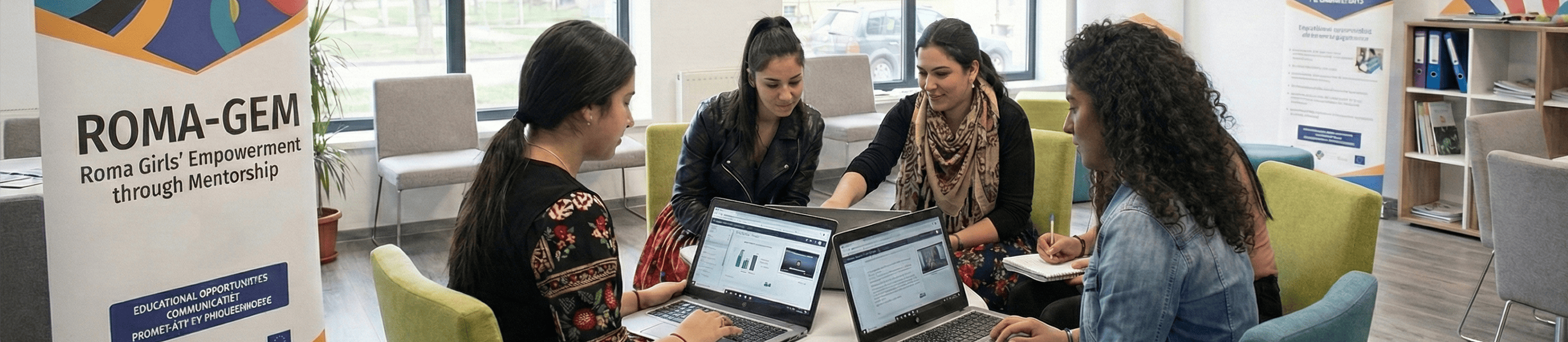
WP1 is the core work package that ensures the ROMA-GEM project is implemented in an effective, transparent, and sustainable manner. Within this work package, project management, quality assurance, environmental impact assessment, the use of digital tools, risk management, and principles of inclusive accessibility are addressed through a holistic approach.
The overall coordination of the project is carried out by Jovesolides, the coordinator of ROMA-GEM. The work plan, timeline, and budget management are monitored with great care. Project progress is tracked through digital management platforms such as Trello, Asana, or Nextcloud, and is regularly documented through monthly partner reports and supporting evidence. A Project Implementation Manual, which defines the responsibilities of all partners, performance indicators, and mechanisms for resolving potential conflicts, has been prepared and is continuously updated throughout the project lifecycle.
Quality assurance is conducted by the Quality Control Committee, led by Kauzi. This committee monitors the achievement of project objectives through satisfaction surveys, quarterly internal audits, and double-stage validation of deliverables. To ensure continuous improvement, the PDCA (Plan–Do–Check–Act) approach is adopted, and corrective recommendations based on evaluation findings are regularly submitted to project management.
The environmental sustainability of the project is assessed by the Green Committee, led by Liofyllo. Key environmental indicators such as carbon footprint, use of recyclable materials, and circular economy principles are taken into account. Environmental impact calculators and life cycle assessment (LCA) tools are used to prepare semi-annual sustainability reports. The prioritization of digital tools, a limited number of face-to-face meetings, and the use of environmentally friendly materials represent concrete applications of this approach.
Risk management also plays a central role within WP1. A Risk Plan, signed at the beginning of the project, outlines the identification and analysis of potential risks and corresponding mitigation strategies. Flexible and practical measures have been developed to address challenges such as digital access barriers, underperformance of partners, budgetary or time deviations, and global crises. Based on the Gantt chart, a 15% time buffer has been allocated to all activities to ensure project continuity.
Furthermore, WP1 places inclusive accessibility at the heart of the project. Multilingual content, digital tools adapted for people with disabilities, materials designed for different learning styles, and improvements based on user feedback constitute the key elements of this approach.
In conclusion, WP1 provides a strong management framework grounded in trust, quality, sustainability, and inclusiveness across all phases of the ROMA-GEM project, ensuring that project objectives are achieved in a timely and effective manner.